Your teeth and your wallet are both paying for your long runs
A typical energy gel costs $2 to $3.50 and gives you about 25 grams of carbohydrate. If you take four on your weekly long run and a couple more on midweek sessions, that’s $12 to $20 a week, or $600 to $1,000 a year, before you add electrolyte tablets, sports drink and recovery shakes.
There’s a second cost that gets less attention. Fueling a long run means putting sugar in your mouth every 20 to 40 minutes for hours, often while breathing hard through a dry mouth. Do that several times a week and your teeth are under almost constant attack.
The good news: your muscles don’t care whether carbohydrate arrives in a $3 foil packet or a spoonful of honey. Cheap, simple food fuels training runs just as well, and a few habits keep your teeth safe whatever you use.
This article is about what to use and how to look after your teeth. For how much to eat, and when, see our guide to fueling your long run. The short version: nothing under 60 minutes, 30–60g per hour from 90 minutes to 2.5 hours, and 60–90g per hour beyond that.
Does real food work as well as gels?
For training, yes. Several studies have compared everyday food with commercial sports products:
- Raisins vs sports chews: Runners did an 80-minute treadmill run followed by a 5K time trial. Raisins and commercial chews both improved time-trial performance compared with water, and raisins did about as well as the chews.1
- Bananas vs sports drink: Cyclists riding 47 miles (75km) performed the same whether they fueled with bananas or a 6% carbohydrate sports drink. The study was funded by a banana company.2
- Potatoes vs gels: Cyclists rode for 2 hours, then did a time trial. Potato purée and carbohydrate gels gave identical times, both much faster than water alone. The potato group reported more bloating and gas, likely because they had to eat a larger amount of food to get the same carbohydrate. The study was funded by a potato industry group.3
The pattern is consistent: carbohydrate is carbohydrate. What changes is how easy it is to carry, chew and digest while you’re moving. Gels win on convenience. Real food wins on cost, and often on taste after the fourth hour of sweet, sticky gels.
Cost per serving: gels vs everyday food
To compare fairly, here’s the rough cost of about 25 grams of carbohydrate, which is roughly one standard gel. Prices are approximate US grocery prices and vary by store and brand, so check your own.
| Fuel | Amount for ~25g carbs | Rough cost |
|---|---|---|
| Energy gel | 1 gel | $2.00–3.50 |
| Energy chews | Half a pack | $1.25–1.75 |
| Sports drink powder (bulk tub) | 1–2 scoops | $0.30–0.60 |
| Medjool dates | 1–2 dates | $0.50–0.80 |
| Honey | 1½ tablespoons | $0.25–0.50 |
| Raisins | 1 small box (1.5 oz / 42g) | $0.20–0.40 |
| Banana | 1 medium | $0.25–0.35 |
| Boiled potatoes | 5 oz (140g) | $0.15–0.25 |
| Pretzels | Small handful (1 oz / 28g) | $0.15–0.25 |
| Rice, honey and salt mix (recipe below) | About ¼ of a batch | $0.10–0.20 |
| Homemade sports drink (recipe below) | 2 tablespoons sugar in water | Under $0.05 |
Switching your weekly training fuel from gels to homemade options can take that $600–1,000 a year down to well under $100.
Homemade fuel recipes
These are the options we use and rate most. All of them are cheap, take a few minutes, and use ingredients you probably already have.
Rice, honey and salt mix
This is our go-to for long runs: a smooth, drinkable “gel” you squeeze from a soft flask. It’s mild, not too sweet, and the salt makes it far easier to keep taking late in a run than sugary gels.
You need:
- 1 cup (about 160g) cooked white rice (brown rice has more fiber, which can upset your stomach on the run)
- 2 tablespoons honey
- ¼ teaspoon table salt
- About ½–¾ cup (120–180 mL) water
Method: Blend everything until completely smooth, adding water until it’s thin enough to squeeze through the nozzle of a soft flask. It makes about 10–12 oz (300–350 mL), enough for two small soft flasks.
What you get: roughly 80g of carbohydrate and 575mg of sodium per batch. A few good squeezes, about a quarter of the batch, is roughly one gel.
It also gives you a mix of two sugars. Rice starch breaks down to glucose, while honey is roughly 40% fructose and 30% glucose. Your gut absorbs glucose and fructose through different routes, which is why “dual-source” gels exist (see fueling your long run). This mix is more glucose-heavy than those gels, so if you’re aiming for the top of the 60–90g per hour range, add an extra tablespoon of honey.
Food safety: cooked rice can carry a bacterium (Bacillus cereus) whose spores survive cooking. Cool cooked rice within about an hour, keep it in the fridge, make the mix the night before at the earliest, and finish it within a few hours of leaving home. Don’t leave it sitting in a warm car or carry it on a very hot day for longer than you need to.
Homemade sports drink
The simplest swap of all, and it matches the formula of commercial drinks closely.
- 16 oz (500 mL) water
- 2–3 tablespoons table sugar (25–37g carbohydrate) or 1½–2 tablespoons honey
- ⅛ teaspoon table salt (about 290mg sodium)
Shake until dissolved. This gives a 5–7.5% carbohydrate solution, the same range as most sports drinks, and about 580mg of sodium per liter, which sits in the range the American College of Sports Medicine (ACSM) recommends for long or hot runs.4 Table sugar is half glucose and half fructose, so it’s naturally “dual-source.” For more on how much sodium you need, see our guide to running hydration.
Avoid adding lemon or lime juice for flavor. It adds acid, which is the main thing harming your teeth in commercial sports drinks (see below).
Rice balls
A solid option for easy long runs and ultra training, where a bit of chewing is fine and something savory is welcome.
- 1 cup (about 160g) cooked sushi or other short-grain rice, which sticks together better
- A pinch of salt
- 1 teaspoon sugar or honey (optional)
Mix while warm, press into two balls or squares, and wrap each in foil or plastic wrap. Each one is roughly 20–25g of carbohydrate. Add a splash of soy sauce for more sodium if you like savory food. The same food-safety rules as the rice mix apply.
Boiled salted potatoes
Boil small potatoes until soft, let them cool, and roll them in salt. Peeled potatoes are easier on the stomach. About 5 oz (140g) gives around 25–30g of carbohydrate. They’re bulky, so they suit slower, easier long runs better than faster sessions.
Honey on its own
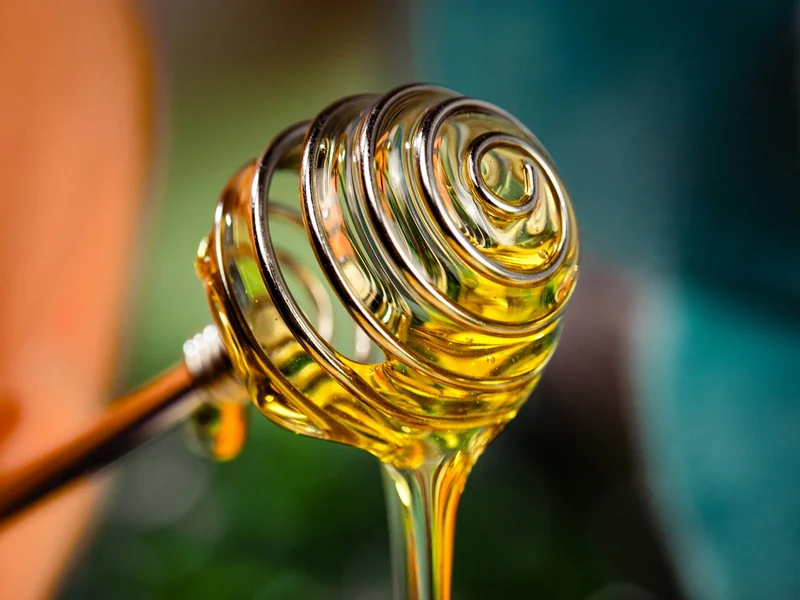
Squeeze honey into a small soft flask or a reusable “fill your own” gel pouch, and thin it with a little water so it flows. One tablespoon is about 17g of carbohydrate. Maple syrup works the same way and is mostly sucrose, so it’s also half glucose and half fructose.
Shop-bought options that don’t cost gel prices
If you don’t want to cook, a grocery store has plenty of cheap fuel:
- Bananas: easy on the stomach, good early in a run, but awkward to carry.
- Raisins and dates: compact and cheap, but sticky on your teeth.
- Pretzels: salty and dry; best with water and on cooler days.
- Fig bars: soft, cheap and around 20g of carbohydrate per bar.
- Applesauce pouches: easy to squeeze, but lower in carbohydrate (often 12–15g) and many contain added acid.
- Gummy candy: cheap and close to a sports chew, but very sticky and often coated in citric acid.
How fueling damages your teeth
Tooth decay (dental caries) happens when bacteria in plaque feed on sugar and produce acid. That acid dissolves tooth enamel. Your saliva neutralizes the acid and helps repair early damage, but that takes time after each sugar hit. How often you have sugar matters more than how much.
Separately, dental erosion is enamel dissolved directly by acid in food and drink, with no bacteria involved. Most sports drinks, and many gels and chews, contain citric acid to add flavor and help preserve them.
Endurance training stacks both risks:
- Frequent sugar: fueling every 20–40 minutes for hours means your teeth never get a break. Sipping sports drink constantly is even worse.
- Dry mouth: in a study of triathletes, saliva flow dropped during hard exercise. The triathletes had more dental erosion than non-exercising people, and the more hours they trained each week, the more tooth decay they had.5
- Acidic drinks: many sports drinks are acidic enough to soften enamel on contact.
The problem is real even at the top of sport. Of 302 athletes examined at the London 2012 Olympics, 55% had tooth decay, and 18% said their oral health was hurting their training or performance.6
How to fuel without the sugar attack
You can’t avoid sugar on long runs. You can cut how often your teeth are exposed, and give them a chance to recover afterward.
During your runs
- Don’t fuel runs that don’t need it. Runs under 60 minutes need nothing but water, and sometimes not even that. This is the biggest saving for your teeth and your wallet.
- Don’t sip sports drinks between runs at your desk or with meals. Use water.
- Take each dose in one go, rather than nibbling or sipping on a sugary drink continuously.
- Rinse with plain water after every dose. Swish it around your teeth and swallow. Carrying a separate water bottle makes this easy.
- Choose less acidic fuel where you can. Rice, potatoes, bananas and plain sugar water have no added acid. Honey is mildly acidic. Citrus-flavored sports drinks, gels and gummies usually contain citric acid.
- Rinse after sticky foods like dried fruit, gummies and chews, which cling to the grooves of your teeth.
After your runs
- Rinse with water as soon as you finish.
- Chew sugar-free gum to get your saliva flowing again.
- Wait about an hour before brushing if you’ve had acidic drinks or gels. Enamel softened by acid is easier to wear away with a toothbrush.
- Brush twice a day with fluoride toothpaste, and spit rather than rinsing it away. Ask your dentist whether a prescription-strength, high-fluoride toothpaste makes sense for you. Sports dentistry experts have called for better prevention like this because poor oral health is so common among athletes.7
- Tell your dentist you’re an endurance athlete who takes in sugar during training, so they can look out for early erosion.
Supplements you can skip, or make yourself
Fuel isn’t the only expensive part of running nutrition. Cheaper alternatives exist for most of it:
- Electrolyte tablets: most runners get enough sodium from a pinch of salt in a homemade drink or from salty food. Higher-sodium products are mainly worth it for heavy, salty sweaters on long, hot runs (see running hydration).
- Caffeine gels: a cup of coffee before you leave does the same job for a few cents. See legal performance boosters ranked for how much caffeine helps.
- Recovery shakes: a glass of chocolate milk or a normal meal with carbohydrate and protein works well. See what to do after a run.
- Protein or branched-chain amino acid (BCAA) products during runs: not needed. Carbohydrate is what fuels running.
When gels are still worth it
Homemade fuel is ideal for training, but gels do have a place:
- Race day. They’re light, easy to carry, quick to take at speed, and you know exactly how much carbohydrate is in each one.
- High targets. Hitting 80–90g per hour in a marathon is much easier with dual-source gels than with food.
- Hard, fast sessions, where chewing isn’t realistic.
A sensible approach is to fuel most of your training with homemade options, then practice your race fuel on your marathon-pace long runs so your gut is used to it. If you plan to use on-course drinks, practice with those too.
Quick reference
- Real food works as well as gels in training. Carbohydrate is carbohydrate.
- Homemade fuel costs a fraction of gels: around $0.10–0.50 per serving vs $2–3.50.
- Rice, honey and salt blended into a soft flask gives about 80g of carbohydrate and 575mg of sodium per batch. Cool rice quickly and use it within hours.
- A homemade sports drink is 2–3 tablespoons of sugar and ⅛ teaspoon of salt in 16 oz (500 mL) of water.
- Protect your teeth: skip fuel on short runs, take each dose in one go, rinse with water after each one, avoid acidic flavors, and wait an hour before brushing.
- Save gels for race day and the sessions where you rehearse it.
This article is general information, not medical or dental advice. If you have diabetes, a digestive condition or existing dental problems, talk to your doctor, dentist or a registered dietitian before changing how you fuel.
References
- Too BW, Cicai S, Hockett KR, et al. Natural versus commercial carbohydrate supplementation and endurance running performance. Journal of the International Society of Sports Nutrition, 2012. doi.org
- Nieman DC, Gillitt ND, Henson DA, et al. Bananas as an energy source during exercise: a metabolomics approach. PLoS One, 2012. doi.org
- Salvador AF, McKenna CF, Alamilla RA, et al. Potato ingestion is as effective as carbohydrate gels to support prolonged cycling performance. Journal of Applied Physiology, 2019. doi.org
- American College of Sports Medicine, Sawka MN, Burke LM, et al. American College of Sports Medicine position stand: Exercise and fluid replacement. Medicine & Science in Sports & Exercise, 2007. doi.org
- Frese C, Frese F, Kuhlmann S, et al. Effect of endurance training on dental erosion, caries, and saliva. Scandinavian Journal of Medicine & Science in Sports, 2015. doi.org
- Needleman I, Ashley P, Petrie A, et al. Oral health and impact on performance of athletes participating in the London 2012 Olympic Games: a cross-sectional study. British Journal of Sports Medicine, 2013. doi.org
- Needleman I, Ashley P, Fine P, et al. Oral health and elite sport performance. British Journal of Sports Medicine, 2015. doi.org