The real question
A common version goes like this: “I’ve got blisters on my toes from running almost every day. How do I heal them quickly?”
The most popular answer is toe socks, and for toe blisters that’s a reasonable place to start. But if you run most days, a blister won’t get much chance to heal unless you also fix whatever is causing it. So this guide covers both: what to do with the blister you have now, and how to stop the next one.
Why blisters happen
A friction blister forms when skin is repeatedly pushed back and forth against something, usually a sock or shoe. The outer layer of skin grips the sock and moves with it, while the deeper layers stay put. That shearing tears the skin apart a few layers down, and the gap fills with fluid.1
Four things make that more likely:
- Friction. More rubbing, for longer, means more shear. That’s why blisters often appear late in long runs or after a jump in weekly mileage.
- Moisture. Damp skin grips fabric harder than dry skin does, which increases friction. Sweaty feet, hot weather and wet roads all raise the risk.1
- Fit. A shoe that’s too loose lets your foot slide. One that’s too short or too snug presses toes against the front and sides.
- Toe box shape. A narrow or pointed toe box squeezes toes into each other. That’s the usual cause of blisters between toes and on the outside of the little toe.
How to prevent them
The research on blister prevention is thinner than you might expect. A systematic review of prevention methods found few high-quality trials and little firm evidence for most products.2 What follows sticks to what has some support, and says so where it doesn’t.
Swap cotton socks for synthetics. Cotton holds sweat against the skin. In a double-blind study of runners, acrylic socks produced fewer and smaller blisters than cotton.3 Socks made from polyester, nylon blends or merino wool all move moisture away from the skin better than cotton, and our guide to the best running socks compares the options. Make sure they fit snugly with no bunching at the toes or heel.
Try toe socks for toe blisters. Toe socks wrap each toe separately, so toes rub against fabric rather than each other. There aren’t trials testing them, but the logic is sound and many runners find they solve between-toe blisters completely. They can take a few runs to get used to.
Tape your hot spots. In a randomized trial of 128 ultramarathon runners, plain paper (surgical) tape applied to blister-prone spots before the race reduced blisters by about 40%.4 It’s cheap, sold at any drugstore, and only mildly sticky, so it won’t tear skin when you take it off. Apply a single smooth layer with no wrinkles.
Use lubricants as a short-term fix. Petroleum jelly and anti-chafe balms reduce friction at first, but the effect can fade during a run, and as they wear off and mix with sweat, friction can end up higher than before.1 They’re worth trying for shorter runs or between toes. For long runs, tape or socks are more reliable.
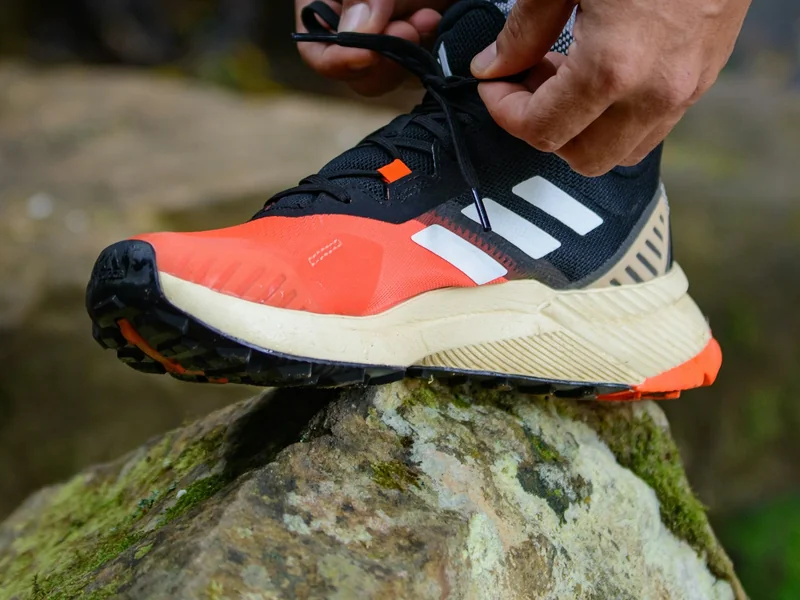
Lace to control movement. If your heel slips, use a “heel lock” (also called a runner’s loop) through the top eyelets to hold your foot back in the shoe so your toes don’t slide forward. If your toes feel squeezed, try skipping the first set of eyelets near the toes to give the front of the shoe more room.
Check your toe box and size. You want roughly a thumb’s width (about half an inch, or 1.3cm) between your longest toe and the end of the shoe, and room to wiggle your toes sideways. Feet swell during runs, so shop later in the day. Our guide to choosing the right running shoes covers fit in more detail, and if you have wide feet, running shoes for heavier runners looks at wider options.
How to treat a blister
If it’s small and not painful, leave it intact. The roof of the blister is the best dressing there is. It keeps the raw skin underneath clean. Cover it with a padded bandage or a hydrocolloid blister dressing, which cushions the area and keeps it moist, helping it heal faster.
If it’s large, tense or painful, you can drain it. For most healthy adults, draining a blister that makes running or walking hard is reasonable:
- Wash your hands and the blister with soap and water.
- Wipe a clean needle with rubbing alcohol.
- Make one or two small holes near the edge of the blister and let the fluid drain out.
- Leave the roof of skin in place. Don’t peel it off.
- Apply a thin layer of petroleum jelly and cover it with a bandage or hydrocolloid dressing.
If the roof has torn off, gently wash the area, trim away only loose flaps of dead skin with clean scissors, and cover it.
Keep it clean while it heals. Change the dressing daily or whenever it gets wet or dirty. Most blisters heal in about a week.
Can you keep running? Usually, yes, if it’s well covered and you can run without changing your stride. If it hurts enough that you’re limping, take a day or two off or swap in cross-training. A blister that’s opened up again every day will take much longer to heal.
Signs of infection
See a doctor if you notice:
- Redness or warmth that spreads beyond the blister
- Increasing swelling or pain after the first day or two
- Yellow or green pus, or a bad smell
- Red streaks running up from the blister
- Fever or feeling unwell
Extra caution for diabetes and poor circulation
If you have diabetes, peripheral artery disease (PAD) or any condition that affects circulation or feeling in your feet, don’t drain blisters yourself. Reduced blood flow slows healing and makes infection more likely, and nerve damage can mean you don’t feel a blister forming or getting worse. Check your feet after every run, keep any blister covered and clean, and have a doctor or podiatrist look at it rather than treating it at home.
Quick summary
- Heal the one you have: leave it intact if you can, drain it cleanly if you can’t, keep the roof on, and cover it.
- Stop the next one: synthetic or wool socks, toe socks for toe blisters, paper tape on known hot spots, a shoe with enough toe room, and lacing that stops your foot sliding.
If blisters keep coming back in the same spot despite all this, the shoe is probably the problem. Try a different model or size.
Common questions
How do you heal a running blister fast?
Leave a small, painless blister intact and cover it with a padded bandage or hydrocolloid blister dressing, which keeps it moist and helps it heal faster. Change the dressing daily or whenever it gets wet or dirty; most blisters heal in about a week.
Should you pop a blister from running?
Only if it’s large, tense or painful enough to make running or walking hard. Use a clean needle to make one or two small holes near the edge, leave the roof of skin in place, then cover it. If you have diabetes, peripheral artery disease (PAD) or reduced feeling in your feet, don’t drain it yourself.
Can I keep running with a blister?
Usually, yes, if it’s well covered and you can run without changing your stride. If it hurts enough that you’re limping, take a day or two off or swap in cross-training.
How do I stop getting blisters on my toes when running?
Swap cotton socks for synthetic or merino ones, try toe socks for blisters between toes, and put paper tape on known hot spots. Also check that your shoes leave about a thumb’s width in front of your longest toe and room to wiggle your toes sideways.
This article is general information, not medical advice.
References
- Knapik JJ, Reynolds KL, Duplantis KL, Jones BH. Friction blisters: pathophysiology, prevention and treatment. Sports Medicine, 1995. pubmed.ncbi.nlm.nih.gov
- Worthing RM, Percy RL, Joslin JD. Prevention of friction blisters in outdoor pursuits: a systematic review. Wilderness & Environmental Medicine, 2017. pubmed.ncbi.nlm.nih.gov
- Herring KM, Richie DH Jr. Friction blisters and sock fiber composition: a double-blind study. Journal of the American Podiatric Medical Association, 1990. pubmed.ncbi.nlm.nih.gov
- Lipman GS et al. Paper tape prevents foot blisters: a randomized prevention trial assessing paper tape in endurance distances II (Pre-TAPED II). Clinical Journal of Sport Medicine, 2016. pubmed.ncbi.nlm.nih.gov