The short answer
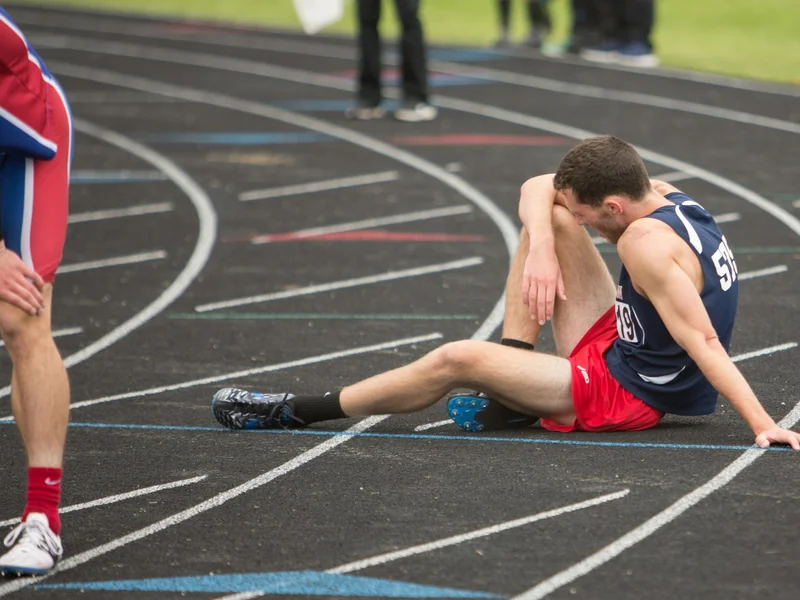
When a run feels slow, it’s easy to blame your training. Sometimes the real cause is the night before.
A year-long study of 224 recreational runners found that after a night of less than 6 hours’ sleep, runners ran slower at the same heart rate the next day. They also ran longer, as if trying to make up for it.1 Going the other way, their heaviest training days were followed by slightly worse sleep and a lower heart rate variability (HRV).
The effects were small on any one day. The bigger lesson is that training and sleep feed into each other. If you only ever adjust your training, you may be fixing the wrong thing.
The study in brief
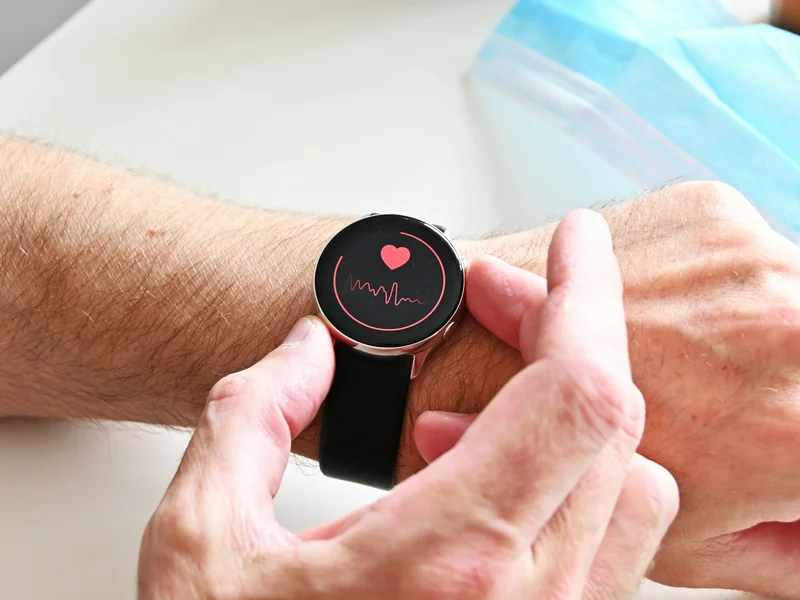
Researchers at Nanjing Sport Institute in China followed 224 recreational runners (182 men and 42 women, average age about 40) for a full year, from June 2024 to June 2025.1 Every runner wore a Garmin watch, and the team pulled the data straight from it, so nothing relied on runners remembering or reporting.
For every run, they had pace, distance, duration, heart rate and cadence. For every night, they had total sleep, time in each sleep stage (light, deep and rapid eye movement, or REM), time awake and overnight HRV. That gave them over 30,000 matched days of sleep followed by training, and training followed by sleep.
They grouped each night into three bands, based on the 7-hour minimum recommended for adults:1, 2
- Under 6 hours: severe sleep deprivation
- 6–7 hours: mild deprivation
- Over 7 hours: normal sleep
Most runners weren’t getting enough
Before the main findings, one number stands out. The runners averaged 6.61 hours of sleep a night, or about 6 hours 37 minutes.1 That’s below the 7-hour minimum. These were committed runners averaging about 7.5 miles (12km) per run, and as a group they were still short on sleep.
Most also got up before 7 a.m. Interestingly, they slept longer on weekdays than on rest days, the opposite of most people. The authors suggest the reason is heavier training on days off from work, which left runners with worse sleep on those nights.
If that sounds familiar, you’re in good company. It’s also the first thing to check before you blame your training.
What happened after a short night
This is how the next day’s run changed with the previous night’s sleep:1
| Previous night | Under 6 hours | 6–7 hours | Over 7 hours |
|---|---|---|---|
| Average pace | 9:54 per mile (6:09 per km) | 9:43 per mile (6:02 per km) | 9:39 per mile (6:00 per km) |
| Distance | 8.2 miles (13.2km) | 7.6 miles (12.2km) | 7.1 miles (11.4km) |
| Duration | 78 minutes | 71 minutes | 65 minutes |
| Average heart rate | 144 bpm | 144 bpm | 143 bpm |
Slower at the same effort
After a night under 6 hours, runners were about 15 seconds per mile (9 seconds per km) slower than after a full night’s sleep. Their heart rate, though, was almost identical, both in beats per minute (bpm) and as a percentage of maximum.
In other words, the same effort produced less speed. The authors call this lower “training efficiency” and suggest it may come from tiredness in the brain and nervous system, slower muscle responses or changes in how the body uses energy.1
Longer, not shorter
Short-sleep days weren’t lighter days. Runners covered about 1.1 miles (1.9km) more and spent about 13 minutes longer on their feet than after a good night.
The authors’ reading is that tired runners compensate. They run longer to hit their usual training volume, completing the same work at a slower pace. The authors warn that adding volume when you’re sleep deprived “does not necessarily improve training quality” and may instead build up fatigue and raise injury risk.1
There may be a simpler explanation
There’s another possibility the numbers can’t rule out: the weekend long run. Runners in the study ran much further on weekends, about 8.7 miles (14.1km) on Saturdays and 10.7 miles (17.2km) on Sundays, against roughly 6.5–6.9 miles (10.4–11.1km) on weekdays. They also slept less before rest days.1
So some short nights were probably early alarms for a long run, and long runs are naturally slower. Some of the “slower and longer” pattern may simply be that. The study adjusted for day of the week in its wider analysis, but it isn’t clear how fully that carried into this comparison.
Either way, the practical point holds. A short night before a long run is common, and it’s worth taking seriously.
What hard training did to sleep
The researchers also looked the other way: how each runner’s heaviest training days (their top quarter by volume) compared with their lightest (bottom quarter) for sleep that night.1
| After a training day that was | Light | Moderate | Heavy |
|---|---|---|---|
| Total sleep | 6.52 hours | 6.53 hours | 6.65 hours |
| Light sleep | 251 minutes | 252 minutes | 260 minutes |
| Deep sleep | 87 minutes | 87 minutes | 86 minutes |
| REM sleep | 54 minutes | 54 minutes | 53 minutes |
| Time awake | 19 minutes | 20 minutes | 22 minutes |
| Average HRV | 56.5 ms | 56.0 ms | 54.8 ms |
After heavy days, runners slept slightly longer, but the extra time was mostly light sleep and time awake. REM dropped a little, deep sleep barely moved, and overnight HRV fell by about 3%. A lower HRV than usual is a sign your body is still under stress. What is HRV and why does it matter for runners? explains how to read it.
So more time in bed after a big day doesn’t mean better recovery. The authors describe this as more fragmented sleep and weaker recovery of the autonomic nervous system, the part of your nervous system that runs things like heart rate on autopilot.
These changes were small. The authors suggest recreational training loads usually aren’t high enough to disturb sleep the way they can in elite athletes. That’s reassuring, but only as long as your load stays sensible.
Group averages can hide what happens to you
Here’s the catch. Every effect above was statistically real but small. The authors say so plainly and point out that group averages can hide big differences between individuals.1 Some runners shrug off a short night. Others feel it for days.
To show this, the study tracked one runner, a 39-year-old man, across 200 runs in the year. The researchers compared each day’s training, sleep and HRV against his own rolling 28-day average. Two things stood out:
- The response lagged. When his training volume jumped, his sleep and HRV didn’t drop straight away. The decline appeared later, after the load had built up.
- Recovery showed up too. When his training dropped for a while, his sleep lengthened and his HRV rose over the following days to 1–2 weeks.
That’s the useful way to use your own watch data. Compare yourself with yourself, over weeks, not with anyone else and not one night at a time.
So, is it your training or your sleep?
When your runs have felt flat for a while, work through these questions before you change your plan:
- How have you been sleeping? Check your average over the past week or two, not just last night. If it’s regularly under 7 hours, start there.
- Is your heart rate normal for the pace? If an easy pace is pushing your heart rate higher than usual, or you’re slower at your normal heart rate, you’re probably tired rather than unfit.
- Has your HRV trend dropped? A 7-day average below your normal range points to accumulated fatigue, whatever the cause.
- Did your training load jump recently? Remember the lag. A big week can catch up with you several days later, through your sleep as much as your legs. Building weekly mileage safely covers how fast to add miles.
- Is it just one run? One slow run after one short night isn’t a training problem. Several weeks of slow runs with good sleep might be.
If your sleep is fine, your load is steady and your runs are still stalling, it’s time to look at the training itself. If your sleep is short, fix that first. It’s cheaper and quicker than rewriting your plan.
What to do after a short night
- Don’t chase your usual pace. Run by effort or heart rate instead. You’ll be slower for the same effort, and that’s expected.
- Don’t add miles to make up for it. The runners in this study ran longer when tired. That’s the habit to avoid. If anything, shorten the run.
- Keep easy runs truly easy. Stay in heart rate zones 1 and 2 only. On a tired day that may mean a noticeably slower pace. Why easy runs should feel easy explains why it matters.
- Move a hard session if you can. A key workout after a bad night is likely to give you less return for the same cost. Swap it with an easy day or rest.
- Protect sleep in your biggest weeks. Heavy training nudges sleep quality down, so that’s when an earlier bedtime pays off most.
For the bigger picture on why sleep matters, read Sleep and running performance. For practical ways to sleep better, see How to get better sleep to improve your running.
The caveats
This is a large, year-long study using objective data, which is rare. Still, keep its limits in mind:1
- It shows association, not cause. The authors are clear that it can’t prove short sleep slows you down. A controlled trial would be needed for that.
- Other factors weren’t measured. Work stress, shift work, family life, mental health, diet, caffeine and screen use can all affect both sleep and running, and none were recorded.
- The weekend effect may blur the picture. Short nights before long runs could explain part of the “slower and longer” finding.
- Watch sleep tracking isn’t perfect. This one is our point rather than the authors’. Wearables are generally reasonable at measuring total sleep but less accurate at splitting it into stages, so treat the deep and REM numbers with some caution.
- The sample isn’t typical. All the runners were Chinese Garmin users who chose to take part, recruited partly through a training platform. Most were men, and a third were in the top performance grade.
- Only one day was tested. The main analysis looked one day ahead. Several short nights in a row may matter more than any single one.
This article is general information, not medical or coaching advice.
References
- Xu X, Lin J, Xu K, Gu Z, Gu X, Zheng J, Chen G, Dai J. Exploring training-sleep characteristics and bidirectional lagged relationships in Chinese recreational runners: insights from a year-long wearable monitoring study. Frontiers in Physiology, 2026;17:1730135. doi.org. Free full text: PubMed Central
- Hirshkowitz M, Whiton K, Albert SM, et al. National Sleep Foundation’s sleep time duration recommendations: methodology and results summary. Sleep Health, 2015;1(1):40–43. doi.org