Start with what you actually need
Running is one of the cheapest sports there is. You need shoes, comfortable clothes and somewhere to go. Everything else is optional.
That doesn’t mean the extras are useless. The right device can make your training more consistent, keep you safer in the dark, and stop you running your easy days too hard. The wrong one sits in a drawer, or worse, nudges you into chasing numbers that don’t matter.
This guide works through the main categories in roughly the order we’d buy them, with what each one is good for, what it isn’t, and how much to spend. One rule runs through all of it: buy for the problem you have now, not the runner you might become.
Shoes first (briefly)
Shoes are the one piece of gear every runner needs, and we cover them in depth elsewhere, so here’s the short version. Buy the pair that feels comfortable when you run in it, and don’t assume price buys comfort or protection. A mid-priced daily trainer is all most runners need.
- Choosing the Right Running Shoes covers fit and comfort.
- Are Expensive Running Shoes Worth It? covers super-shoes and cost per mile.
- Running Shoe Rotation Guide covers when a second pair earns its place.
And while you’re there, a decent pair of running socks does more for blisters than any gadget on this list.
GPS watches
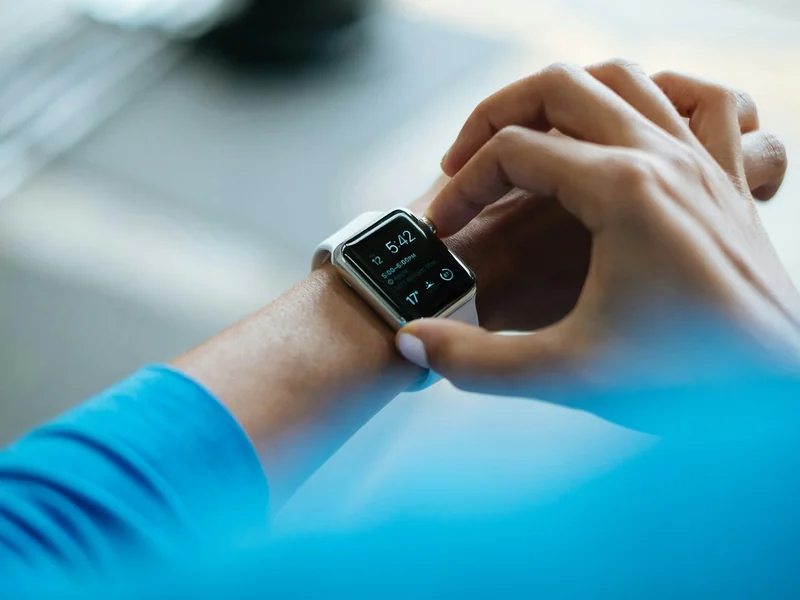
A GPS (Global Positioning System) watch is the device most runners buy first, and for good reason. It records distance, pace, time and heart rate without you having to carry a phone, and it builds a history of your training you can look back on.
What a watch is good for
- Consistency. Seeing your weeks stack up is motivating, and a log makes it easy to build weekly mileage safely rather than guessing.
- Pacing structured sessions. Intervals, tempo runs and progression runs are far easier when the watch beeps you through each rep.
- Keeping easy runs easy. A heart rate alert set to the top of zone 2 is one of the simplest ways to stop yourself drifting too hard. Our guide to understanding heart rate zones explains how to set them.
What it isn’t
GPS distance is an estimate. In a 2020 study of eight sport watches from five major brands, the average distance error ranged from about 3% to 6%, and every watch was less accurate in built-up areas and under tree cover than in the open.1 On a 5-mile (8km) run, that’s a possible gap of a quarter of a mile (400m) or so. It’s fine for training, but it’s why your watch rarely agrees exactly with a race’s measured course.
The extra metrics on high-end watches, such as training load, recovery time and estimated VO2 max (maximal oxygen uptake), are educated guesses built from your heart rate and pace. They’re useful for spotting trends over weeks. They aren’t a reason to skip a run you feel good for, or to push through one you feel bad in. Our VO2 max guide explains what the watch estimate can and can’t tell you.
How much to spend
| Tier | Rough price | What you get | Who it suits |
|---|---|---|---|
| Entry | $150–250 | GPS, wrist heart rate, pace alerts, structured workouts, phone notifications | Most runners, including many experienced ones |
| Mid-range | $250–450 | Better battery, dual-frequency GPS, training load and recovery metrics, sometimes maps or music | Runners training for races several times a week |
| Premium | $450+ | Multi-day battery, full offline maps, rugged build, larger or brighter screens | Trail, ultra and mountain runners, or anyone who simply wants the best |
The features that matter most are the boring ones: battery life, a readable screen, buttons you can use with sweaty or gloved hands, and a comfortable strap. Dual-frequency GPS genuinely helps in cities and under trees. Most of the rest you can live without.
If you already own a smartwatch, try running with it before buying a dedicated running watch. For easy running and logging, many are perfectly adequate. The main trade-offs tend to be battery life and how well they handle structured workouts.
Heart rate straps
Every running watch now has an optical heart rate sensor on the back, which shines light into your wrist and reads changes in blood flow. A chest strap instead measures the electrical signal from your heart directly, the same principle as an ECG (electrocardiogram).
Is the wrist good enough?
For steady, easy running, often yes. For anything else, a chest strap is noticeably better.
When researchers tested five optical monitors and a chest strap against an ECG during treadmill, bike and elliptical exercise, the chest strap matched the ECG almost perfectly. Most wrist devices did reasonably well on the treadmill, but their accuracy varied widely between models and dropped on the bike and elliptical, where the arms move differently.2 A larger study found a wrist device stayed within 10 beats per minute of a chest strap about 95% of the time during running, which is acceptable for general use, but individual readings could still be off by up to 15 beats per minute.3
Wrist sensors struggle most with:
- Intervals and hills, where heart rate changes quickly and the wrist lags behind.
- Cadence lock, where the sensor picks up your arm swing and reports your step rate (often 160–180) as your heart rate.
- Cold weather, dark or tattooed skin, and loose straps, all of which weaken the optical signal.
Who should buy one
A chest strap is the best-value upgrade on this list if you train by heart rate. It costs roughly $50–100, lasts for years, and pairs with almost any watch or app over Bluetooth or ANT+ (a low-power wireless standard used by fitness devices). If you’ve ever seen a sudden, impossible spike on an easy run, a strap will fix it.
Look for one that supports both Bluetooth and ANT+, so it works with your watch and a phone or gym equipment. Some models also store data when you’re away from your watch, which is handy for swimming or strength sessions.
If you follow our approach to building an aerobic base, where easy means zones 1–2 and nothing higher, a strap makes that much easier to stick to. If you run by feel and use the talk test, you don’t need one at all.
Armband optical sensors, worn on the upper arm or forearm, sit between the two. They’re more comfortable than a chest strap for some people and usually more stable than a wrist sensor.
Headphones
Music genuinely helps many runners. A large 2020 meta-analysis of music in exercise and sport found that it improved mood, lowered how hard exercise felt, and modestly improved performance.4 Podcasts and audiobooks can make long easy runs pass much faster.
The trade-off is awareness. Traffic, cyclists, other runners and dogs are all easier to deal with when you can hear them.
What to look for
- Open-ear or bone conduction headphones sit outside your ear canal, so you hear your audio and your surroundings at the same time. For road running, this is the type we’d recommend first.
- In-ear headphones with a transparency or ambient mode let some outside sound through. They sound better than open-ear models but block more, even with the mode turned on.
- A secure fit matters more than sound quality. Hooks or wings stop them bouncing loose.
- Sweat and water resistance of at least IPX4 (rated against splashing water). Higher ratings help if you run in heavy rain or sweat a lot.
- Battery life that covers your longest run with room to spare.
Expect to pay around $80–200 for a good pair of open-ear or sport in-ear headphones.
Using them safely
- Keep the volume low enough to hear a voice or a car behind you.
- Leave one ear free, or skip audio entirely, on busy roads and unlit routes.
- Check race rules before race day. Many races allow headphones, but some discourage or ban them, especially on courses that aren’t fully closed to traffic.
Lights and headlamps
If you run before sunrise or after sunset, and through winter most runners do, lights are the most important safety purchase you can make. They do two different jobs: helping you see and helping you be seen.
Being seen
Pedestrians consistently overestimate how visible they are to drivers. Research on night-time visibility found that drivers recognized pedestrians far sooner when reflective material was placed on the moving joints, such as the ankles, knees, wrists and elbows, than when it was worn as a vest on the torso.5 Our eyes are tuned to recognize the movement of a human body, so reflective or lit bands where you move most help a driver identify you as a person, not just a light.
Practical options:
- Clip-on LED (light-emitting diode) lights for the front and back of your clothing or waistband, with a white light at the front and red at the back.
- Reflective or lit bands for your ankles and wrists. They’re cheap and make a big difference.
- Reflective details on your jacket, tights and shoes. Most running gear has some, but it’s rarely enough on its own.
Flashing modes catch attention but make it harder to judge your distance and speed. A steady light, or a mix of steady and flashing, is often the better choice near traffic.
Seeing where you’re going
On lit streets, clip-on lights are usually enough. On unlit roads, paths and trails, you need a headlamp or a chest or waist light.
| Where you run | Brightness to look for | Notes |
|---|---|---|
| Lit streets and parks | 100–200 lumens | Mainly to be seen; a small headlamp or chest light is plenty |
| Unlit roads and paths | 200–400 lumens | Enough to spot potholes and curbs at running pace |
| Technical trails | 400+ lumens | A wide beam helps on rocks and roots; consider a second light |
What else matters:
- Fit and bounce. A light that bounces is distracting. Try it at running pace, not just walking around the store. Many runners prefer a chest or waist light because it doesn’t move with your head.
- Beam pattern. A mix of spot (distance) and flood (width) is ideal for running.
- Battery life at the brightness you’ll actually use. The headline figure is usually for the lowest setting. Check the run time on medium or high.
- USB-C charging, so you can charge it with the same cable as everything else.
- A lock mode, so it doesn’t switch on in your bag.
Lights are cheap compared with almost everything else here. A good headlamp costs around $40–100, and clip-on lights and bands are often under $20.
Apps
Most of the value in modern running tech is in the software. Here are the main options and what they do well.
Garmin Connect
Garmin Connect is the free companion app for Garmin watches. It syncs your runs, shows your training history, health data like sleep and resting heart rate, and lets you build structured workouts and send them to your watch. The free version is comprehensive.
Garmin also offers Connect+, a paid tier launched in 2025 at $6.99 a month or $69.99 a year. It adds extra insights and features, but everything that was free before it launched remains free.6 Most runners won’t miss it.
COROS
The COROS app does the same job for COROS watches: syncing, training history, workout building and training plans. COROS watches are known for long battery life at competitive prices, and the app’s training load and fitness metrics are all included free, without a subscription.
Strava
Strava is the social network of running. It works with almost every watch and phone, so it doesn’t matter what device you or your friends use. It’s good for:
- Motivation and community. Kudos, comments and clubs keep a lot of runners going.
- Routes and heatmaps, which show where other people run, which is handy in a new place.
- Segments, short sections of road or trail where you can compare times.
The free version covers recording, sharing and community. The paid subscription adds route planning, deeper analysis and progress tracking, at roughly $80 a year.7 Strava also now owns the training plan app Runna, and offers the two as a bundle. Our guide to running apps and online platforms compares Strava, Garmin Connect, Runalyze and Runna in more detail.
A word of caution: Strava makes it very easy to compare your runs with other people’s. That’s fun, but it can tempt you to race your easy runs. If you find yourself doing that, hide your pace on easy days or turn off public sharing.
Privacy matters. Set a privacy zone around your home and other places you start runs regularly, and check who can see your activities.
Training plan apps
Training plan apps build a schedule around your goal race, available days and current fitness, and many adjust it as you go. Popular options include Runna, TrainingPeaks and the free plans built into Garmin Connect and the COROS app.
They suit runners who want structure but don’t want to write their own plan. They’re less useful if you already follow a plan or work with a coach.
What to check before you pay:
- Does it adapt when you miss sessions or feel run down, or does it just keep going?
- Are the easy runs genuinely easy? Some apps set paces that are too quick for easy days. If yours does, slow down and use effort or heart rate instead.
- Does it sync with your watch, so workouts appear on your wrist automatically?
- Can you try it free first?
Plan apps typically cost $10–20 a month. Before subscribing, try the free plans in your watch’s own app. For many runners, they’re enough.
Other devices worth knowing about
Phone carriers and running belts
If you run with your phone, a slim waist belt or a vest with chest pockets beats an armband for comfort, and both stop the phone bouncing. Even if you use a watch, carrying a phone on longer or more remote runs means you can call for help or a ride home.
Safety features and ID
Many watches and phones offer live tracking, which shares your location with a friend or family member during a run, and incident detection, which can alert an emergency contact after a fall. Both are worth turning on if you run alone. A simple ID tag on your shoe or wrist, with your name and an emergency contact, costs very little and works when your phone doesn’t.
Sleep and recovery trackers
Smart rings and screenless bands track sleep, resting heart rate and HRV (heart rate variability), the variation in time between heartbeats that tends to drop when you’re tired or stressed. Your running watch probably tracks much of this already. A dedicated device is worth it only if you won’t wear a watch to bed. Sleep itself matters far more than the tracker, as our article on sleep and running performance explains.
Treadmills
A treadmill is a big purchase, but it can be the difference between running and not running if you have young children, work shifts or face long, dark winters. Prioritize a sturdy frame, a long enough deck for your stride, and a motor that holds your easy pace comfortably. Smart features and subscription classes are optional extras.
Massage guns and foam rollers
These can make your muscles feel looser and less sore, but the evidence that they speed up recovery or prevent injury is limited. A foam roller costs about $20–40 and does most of what a massage gun does. Treat either as a nice-to-have, not part of your training.
What to buy, in order
| Your running | Worth buying | Can wait |
|---|---|---|
| Just starting out | Comfortable shoes, running socks, a free app on your phone, and lights if you run in the dark | Everything else |
| Running regularly, no race goals | An entry-level GPS watch, open-ear headphones if you like audio, a good headlamp for winter | Premium watch, paid subscriptions |
| Training for a race | A watch that handles structured workouts, a chest heart rate strap, and a plan (free or paid) | Recovery tracker, premium watch |
| Trail or ultra running | A long-battery watch with maps, a bright headlamp with a spare, a running vest | Treadmill, massage gun |
If you only take one thing from this guide, make it this: the best device is the one that helps you run consistently and safely. A $200 watch you use every day beats a $700 one that tells you you’re unrecovered. And if you run in the dark, buy lights before you buy anything else on this list.
This article is general information, not medical advice.
References
- Gilgen-Ammann R, Schweizer T, Wyss T. Accuracy of distance recordings in eight positioning-enabled sport watches: instrument validation study. JMIR mHealth and uHealth, 2020. pubmed.ncbi.nlm.nih.gov
- Gillinov S et al. Variable accuracy of wearable heart rate monitors during aerobic exercise. Medicine & Science in Sports & Exercise, 2017. pubmed.ncbi.nlm.nih.gov
- Sartor F et al. Wrist-worn optical and chest strap heart rate comparison in a heterogeneous sample of healthy individuals and in coronary artery disease patients. BMC Sports Science, Medicine and Rehabilitation, 2018. ncbi.nlm.nih.gov
- Terry PC, Karageorghis CI, Curran ML, Martin OV, Parsons-Smith RL. Effects of music in exercise and sport: a meta-analytic review. Psychological Bulletin, 2020. doi.org
- Wood JM, Tyrrell RA, Carberry TP. Limitations in drivers’ ability to recognize pedestrians at night. Human Factors, 2005. swov.nl
- Garmin. Garmin Connect+ announcement and pricing, March 2025. t3.com
- Strava pricing, 2026. runnerspicks.com