Everything claims to make you faster
Search “how to run faster” and you’ll be told to buy carbon-plated shoes, stop heel striking, take an ice bath, book an altitude camp and stretch one particular muscle. All of these get talked about a lot. What gets talked about the most often isn’t what makes the biggest difference.
Some of the most hyped ideas deliver very little. Some of the least exciting ones, like how you split your easy and hard running or how you pace the first mile of a race, can be worth minutes.
So we’ve ranked the most common tips into five tiers, based on the research and on what we keep seeing in everyday runners:
| Tier | What it means | Tips |
|---|---|---|
| Game changer | The foundations. Get these wrong and nothing else saves you | Consistency, intensity balance, race execution |
| Big difference | Real, measurable gains on top of good training | Super shoes, race-day caffeine and bicarbonate |
| Useful | Worth doing for most runners, in moderation | Strength training, heat training |
| Situational | Helps some people in specific cases | Altitude training, form changes and stretching |
| Overhyped | Can actually work against you if used wrongly | Ice baths after every hard session |
The order matters. Gear and supplements can only add to the fitness you already have. They can’t replace it.
Game changers
1. Run consistently, and build volume gradually
The biggest reason most runners get faster is simply running more, week after week, without getting hurt. Your aerobic engine grows slowly. It responds to months of steady work, not to one heroic week.
That means:
- Run most days you planned to, rather than packing everything into a big weekend.
- Build mileage gradually and take an easier week every few weeks. Our guide to building weekly mileage safely explains how.
- Protect your sleep, because that’s when the adaptation happens. See sleep and running performance.
A runner who runs four times a week for a year will almost always beat one who runs six times a week for six weeks and then spends two months injured.
2. Get the balance of easy and hard running right
This is where most amateur runners go wrong, and it’s free to fix.
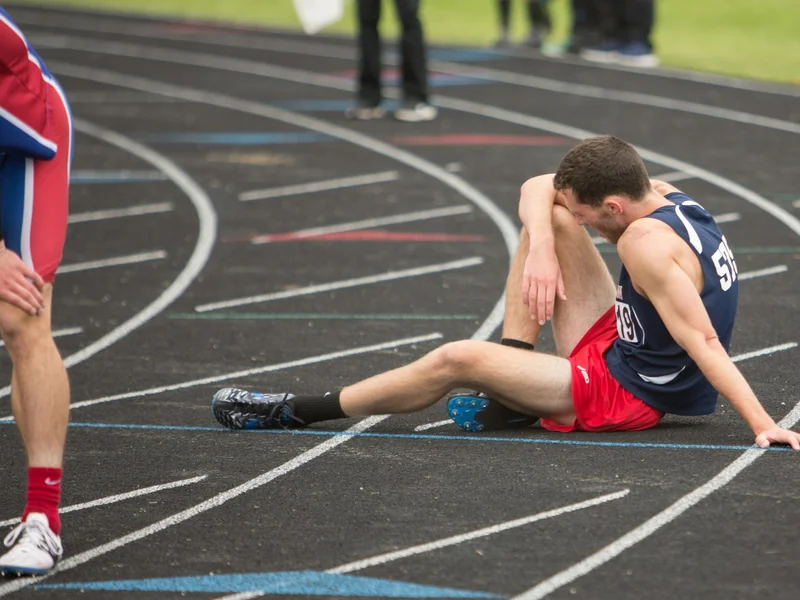
The common mistake is running almost every run at a “comfortably hard” middle effort. It feels productive, but it’s too hard to recover from and too easy to drive real fitness gains. Over time it often leads to injury, burnout, or simply losing the joy of running.
The opposite mistake is only ever running easy. That works well for newer runners, who improve from almost any running. But to keep improving you usually need either a lot more volume, which most people don’t have time for, or some genuinely hard sessions.
Studies of endurance athletes, from elite to recreational, show the same pattern. Most successful runners do roughly 80% of their running easy and about 20% at moderate to hard efforts. Training studies that compare this approach with lots of middle-effort running tend to favor it.
In practice:
- Keep easy runs truly easy: heart rate zones 1–2, where you can hold a conversation. Zone 3 or above isn’t an easy run. Read why easy runs should feel easy and understanding heart rate zones.
- Do one or two quality sessions a week, such as threshold intervals, hill reps or track work. Our top 10 speed workouts for a faster 5K is a good place to start.
- Make the hard days hard and the easy days easy. The middle ground is where progress stalls.
3. Nail your race execution: taper, fueling and pacing
This is one of the most underrated areas in amateur running. Many runners spend months building great fitness and buy the best shoes they can find, then throw it away in the final week or on race day. Race execution covers three things.
Taper properly. Hard or long workouts in the last week can ruin your race. Many runners chase proof of their fitness close to race day and end up with tired legs at the start line. The final week isn’t the time to prove your fitness. That’s what the race is for. A meta-analysis of tapering found the best results came from cutting training volume by roughly 40–60% over about two weeks while keeping some intensity, so your legs stay sharp without carrying fatigue.
Fuel properly for longer races. In races from the half marathon, 13.1 miles (21.1km), upward, running out of carbohydrate can become the main thing slowing you down. Current sports nutrition guidance suggests around 60–90 grams of carbohydrate per hour for races lasting longer than about two and a half hours, built up gradually in training so your gut can handle it. Getting this right can make a bigger difference than any pair of shoes. Our guide on how to fuel your long run covers how to practice it, and cheap running fuel without gels has budget options.
Pace evenly, or slightly negative split. Going out too hard is the most common race-day mistake. The fast early miles feel easy, but you pay them back with interest later. Running an even pace, or a slightly faster second half (a negative split), is how most world records are set. It also makes the race far more enjoyable.
Together, a good taper, a fueling plan and sensible pacing can save you many minutes in a marathon, often more than everything in the next tier combined.
Big difference
4. Race in super shoes
“Super shoes” combine a stiff carbon plate with a very light, bouncy foam that returns more energy than traditional foams. They’re expensive, but they’re one of the few gear purchases with clear evidence behind them.
Lab studies have repeatedly shown that runners of all abilities use less energy at the same pace in these shoes than in traditional racing flats. The original lab study found an average saving of about 4%. The benefit shows up in real races too. An observational study of marathon results estimated that switching to a super shoe was linked with finish times 0.6–2.8% faster. For a 3-hour marathon, that’s roughly 1 to 5 minutes, and the shoes have improved since.
So why aren’t they a game changer? Because a shoe can only improve the fitness you already have. It multiplies your training. It doesn’t replace it.
- Save them for races and key sessions, and break them in first.
- If you’re a slower runner wondering whether the benefit still applies, see do super shoes help at 10-minute-mile pace?
- For everyday training shoes, read are expensive running shoes worth it?
5. Use caffeine (and maybe bicarbonate) on race day
The supplement aisle is mostly marketing. But a handful of supplements have strong, repeated evidence behind them:
- Caffeine reliably improves endurance performance and makes hard efforts feel easier. A typical dose is around 3 mg per kilogram of body weight, about 200mg for a 150 lb (68kg) runner, taken roughly an hour before the start.
- Sodium bicarbonate (baking soda) helps buffer the acid that builds up in hard efforts. It’s most useful for shorter, intense races, but it’s notorious for upsetting stomachs.
- Dietary nitrate, usually from beetroot juice, can improve running economy, especially in less-trained runners.
The catch is your gut. Test everything in training first, never for the first time on race day. If your stomach handles them, racing on caffeine and bicarbonate can feel noticeably different.
For doses, timing and the size of each gain, see our full guide to legal performance boosters, ranked.
Individually these sit in the “big difference” tier. The rest of the supplement industry, from fancy powders to the next big thing, mostly doesn’t.
Useful
6. Do some strength training, but don’t let it compete with running
Done well, strength training is a powerful tool. A systematic review with meta-analysis found strength training had a large beneficial effect on running economy in well-trained runners, and many other studies agree. Stronger legs also cope better with high mileage.
Keep it simple:
- Calf raises, split squats, squats and step-ups cover most of what runners need.
- One or two short sessions a week is enough for most runners.
- Progress gradually, adding load slowly over weeks.
The key rule: strength work must not compete with your running. If you’re skipping or ruining key running sessions because your legs are wrecked from the gym, you did too much.
Why isn’t it higher? Plenty of world-class distance runners do very little structured strength training and are still faster than almost anyone. You get good at what you train for, and strength work will never replace running itself. It’s a valuable addition for most of us, but it isn’t required to run fast. Our guides to strength training for distance runners and core workouts for runners show you where to start.
7. Try heat training
Heat training is getting a lot of attention in endurance sport, and unlike altitude, it’s free. You can run in hot conditions, deliberately overdress, or use a sauna or hot bath after training for passive heat exposure.
Heat stress triggers real adaptations: your blood plasma volume increases, your body gets better at sweating and cooling, and your aerobic capacity can improve. In one well-known study, trained cyclists did 10 days of heat acclimation. They improved performance in hot and in cool conditions, with plasma volume rising by about 6.5%. A broader meta-analysis supports gains in time trial performance, maximal oxygen uptake (VO2 max), perceived effort and plasma volume.
- If you’re racing somewhere hot, heat training moves up to the “big difference” tier. You get the performance boost and the acclimatization together.
- For a typical runner racing in mild weather, it’s a useful extra.
- Build up gradually, stay hydrated, and stop if you feel dizzy or unwell. Heat stress is real stress.
Situational
8. Altitude training
The pitch sounds like a cheat code. Live in the mountains where there’s less oxygen, your body makes more red blood cells, and you come home with a bigger engine. Elite runners have used altitude camps for decades, and the physiology is real. Research shows altitude training can raise hemoglobin (the oxygen-carrying protein in your blood) and improve time trial performance compared with training at low altitude.
But it comes with real costs:
- You usually need several weeks at altitude for it to pay off.
- It’s expensive unless you already live high up.
- It’s easy to overtrain, because the lower oxygen makes recovery worse.
For an elite athlete with the time, coaching and a clear plan, it can make sense. For most everyday runners, an altitude camp isn’t what stands between you and a new personal record (PR).
9. Form changes and stretching
This is the free tip everyone online pushes: stop heel striking, change your arm swing, stretch this one muscle, and you’ll be faster and injury-free. It sounds logical, but running technique isn’t that simple, and the evidence doesn’t back up the hype.
A recent systematic review found no change in running economy after runners followed stretching programs. Forcing a new foot strike or stride often makes runners less efficient at first, because your body has already settled on a pattern that suits it. See cadence: does it really matter? and stretching before or after? for more on both.
That doesn’t make all form work or stretching useless. Gait retraining (changing how you run) and work on a specific mobility limitation have a place, mostly in particular injury cases, ideally guided by a physical therapist and always introduced gradually. Drills can also help you feel smoother at speed (see our running drills guide). But for most runners, changing their form isn’t what will make them faster.
Overhyped
10. Ice baths after every hard session
The theory sounds good. Cold reduces inflammation, less inflammation means less soreness, and less soreness means faster recovery.
The problem is that the inflammation you’re rushing to shut down isn’t just damage. It’s part of the signal your body uses to adapt to the training you just did. In one clever study, participants trained both legs, then cooled just one leg in cold water afterward. The cooled leg showed lower muscle protein synthesis (the process of building and repairing muscle) over the following hours and days.
That doesn’t prove ice baths are always bad. They have a place when you need to perform again soon: a heavy training camp, a multi-day stage race, or a race tomorrow. They can help you feel less sore and fresher for the next effort.
But in a normal training block, jumping into an ice bath after every hard session because it looks good on social media may be blunting the very adaptations you’re training for. If you want to recover well, the basics do more: food, sleep and easy days. See what to do after a run and active recovery vs rest days.
Where to put your effort
If you want to run faster, work through the tiers from the top:
- Run consistently and build volume gradually.
- Keep easy runs easy (zones 1–2) and add one or two genuinely hard sessions a week.
- Plan your race: a proper taper, a practiced fueling plan and an even pace.
- Then consider super shoes and race-day caffeine.
- Add short, simple strength sessions, and heat training if your race will be hot.
- Don’t worry about altitude camps, reinventing your form, or ice baths after every session.
The unglamorous tips at the top are free, and they’re worth more than everything below them combined.
Common questions
What is the best way to run faster?
Run consistently and build your volume gradually. That, together with keeping most of your running easy and getting your race taper, fueling and pacing right, is worth more than any gear or supplement.
What percentage of my running should be easy?
Most successful runners do roughly 80% of their running easy and about 20% at moderate to hard efforts. Easy means heart rate zones 1–2, where you can hold a conversation.
Do super shoes really make you faster?
Yes. An observational study of marathon results linked switching to a super shoe with finish times 0.6–2.8% faster, roughly 1 to 5 minutes for a 3-hour marathon. They multiply your training rather than replace it, so save them for races and key sessions.
Should I take an ice bath after every run?
No. In a normal training block, ice baths after every hard session may blunt the adaptations you’re training for. They have a place when you need to perform again soon, such as a heavy training camp, a multi-day stage race or a race tomorrow.
References
- Seiler S. What is best practice for training intensity and duration distribution in endurance athletes? International Journal of Sports Physiology and Performance, 2010. doi.org
- Stöggl T, Sperlich B. Polarized training has greater impact on key endurance variables than threshold, high intensity, or high volume training. Frontiers in Physiology, 2014. doi.org
- Bosquet L, Montpetit J, Arvisais D, Mujika I. Effects of tapering on performance: a meta-analysis. Medicine & Science in Sports & Exercise, 2007.
- Thomas DT, Erdman KA, Burke LM. American College of Sports Medicine Joint Position Statement: Nutrition and Athletic Performance. Medicine & Science in Sports & Exercise, 2016.
- Hoogkamer W, Kipp S, Frank JH, et al. A comparison of the energetic cost of running in marathon racing shoes. Sports Medicine, 2018. doi.org
- Guinness JK, Bhattacharya D, Chen J, Chang M, Mehrnejad A. An observational study of the effect of Nike Vaporfly shoes on marathon performance. bioRxiv, 2020.
- Grgic J, Grgic I, Pickering C, et al. Wake up and smell the coffee: caffeine supplementation and exercise performance — an umbrella review of 21 published meta-analyses. British Journal of Sports Medicine, 2020.
- Balsalobre-Fernández C, Santos-Concejero J, Grivas GV. Effects of strength training on running economy in highly trained runners: a systematic review with meta-analysis of controlled trials. Journal of Strength and Conditioning Research, 2016.
- Lorenzo S, Halliwill JR, Sawka MN, Minson CT. Heat acclimation improves exercise performance. Journal of Applied Physiology, 2010. doi.org
- Fuchs CJ, Kouw IWK, Churchward-Venne TA, et al. Postexercise cooling impairs muscle protein synthesis rates in recreational athletes. The Journal of Physiology, 2020. doi.org